『SoTA』 (2024)
Device Topology
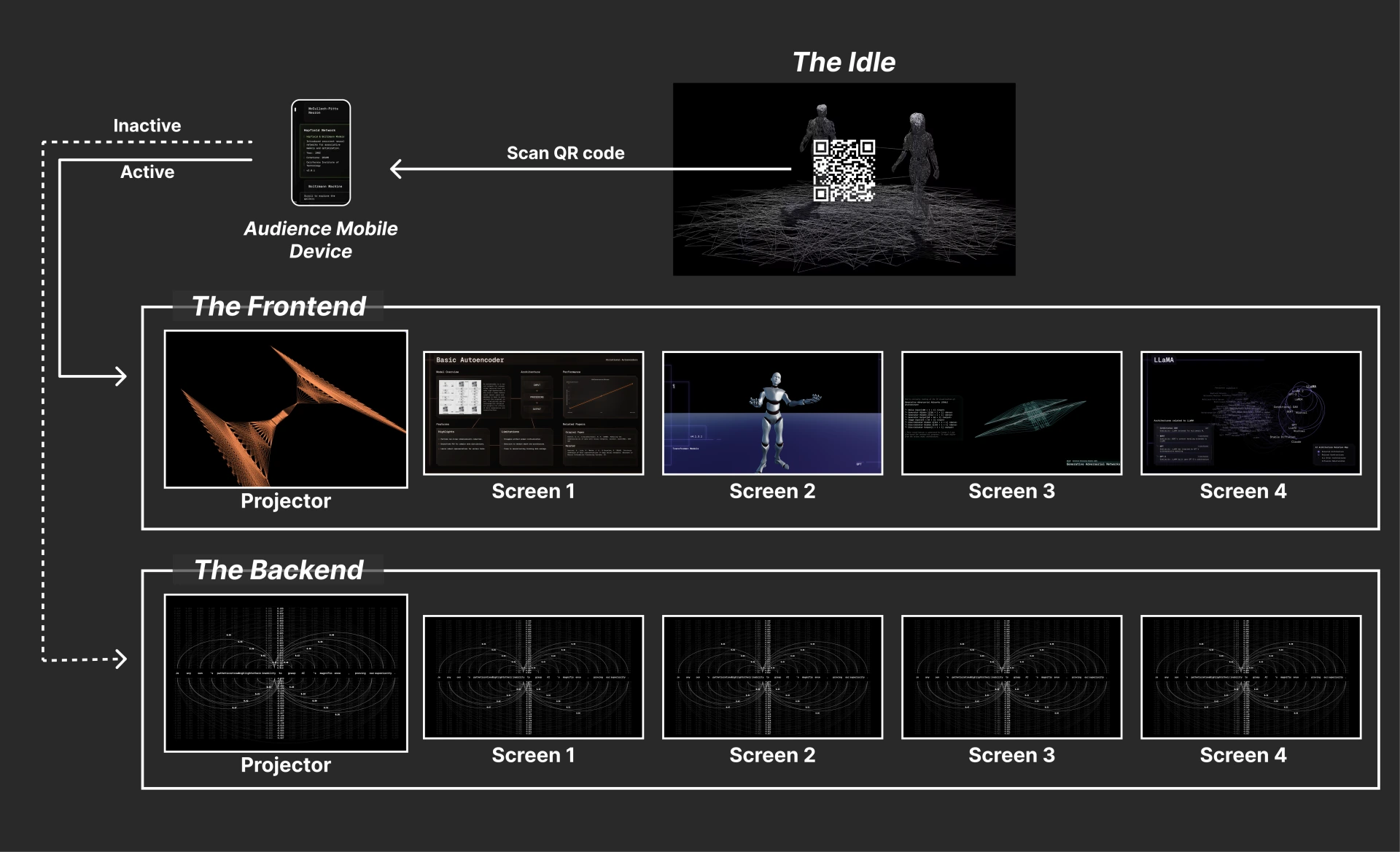
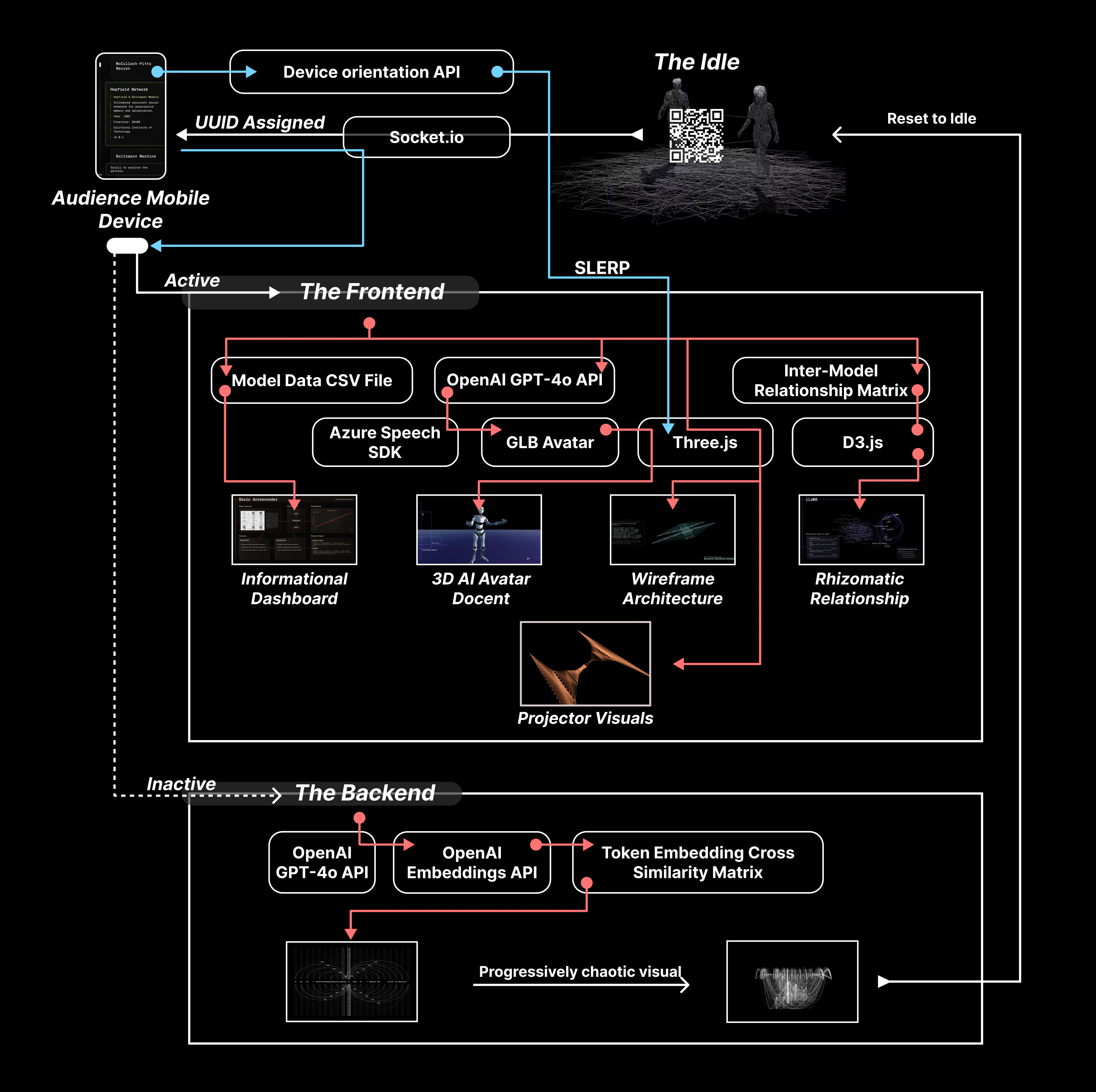
One visitor's phone drives two projections and four screens through a Socket.IO server. Selecting a model is broadcast to every screen; the phone's orientation streams to the projections and the avatar; a heartbeat every second tells the server the phone is still there. When the phone is locked or closed the heartbeat stops, the screens fall into a Blue Screen of Death one after another, and the Backend begins: each screen asks GPT-4o and the embeddings API for text and shares it with the others through the server, without the visitor.
Images
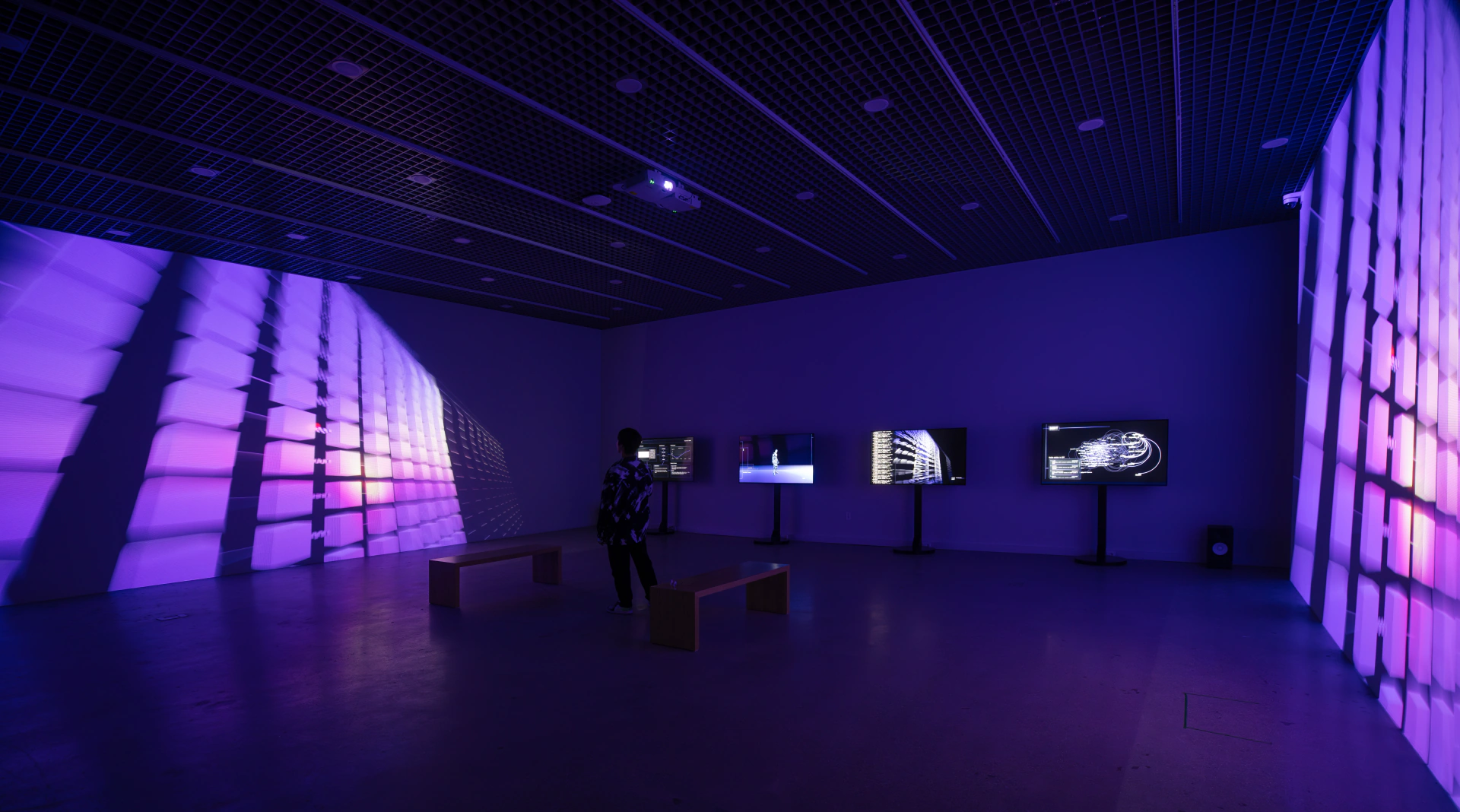
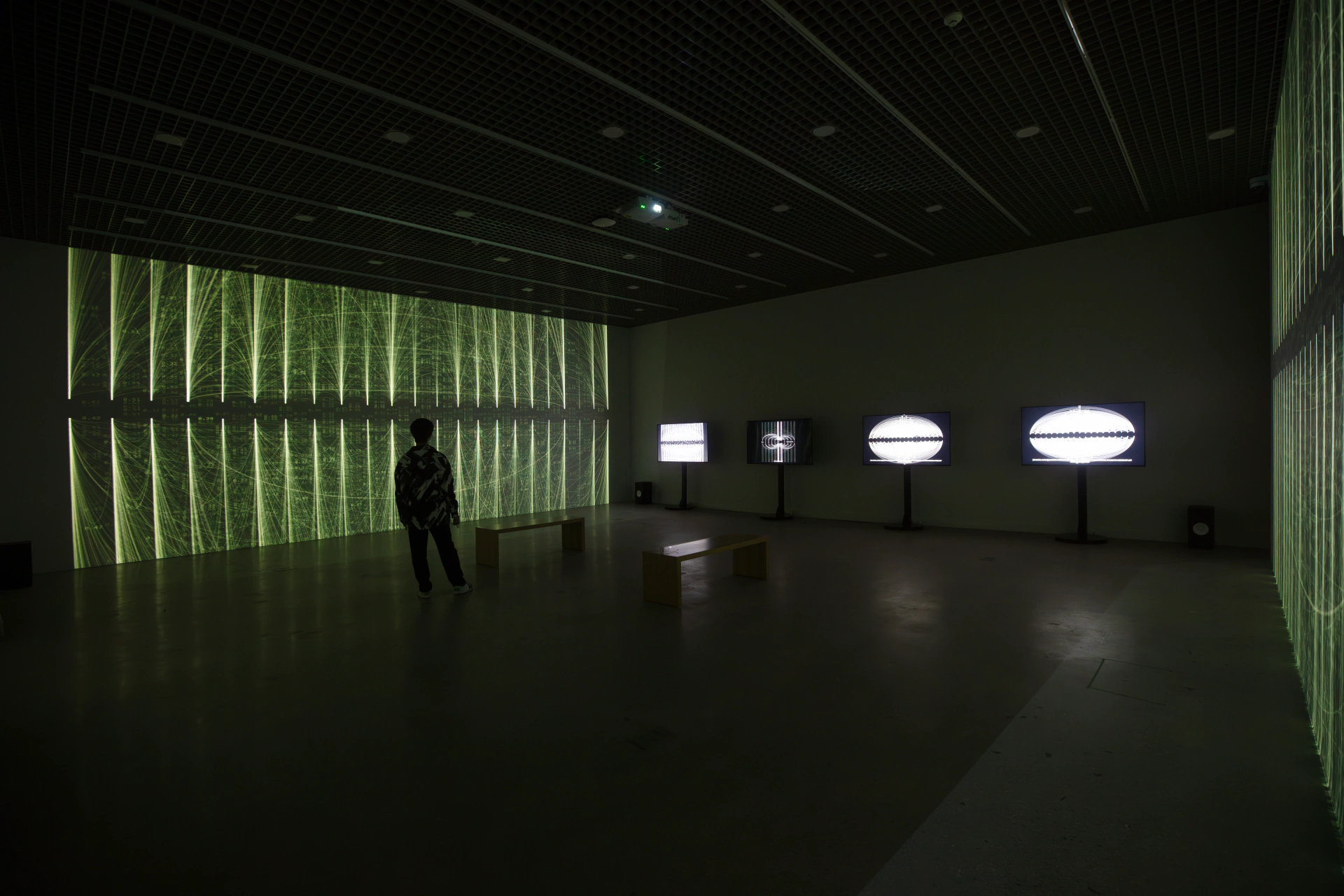
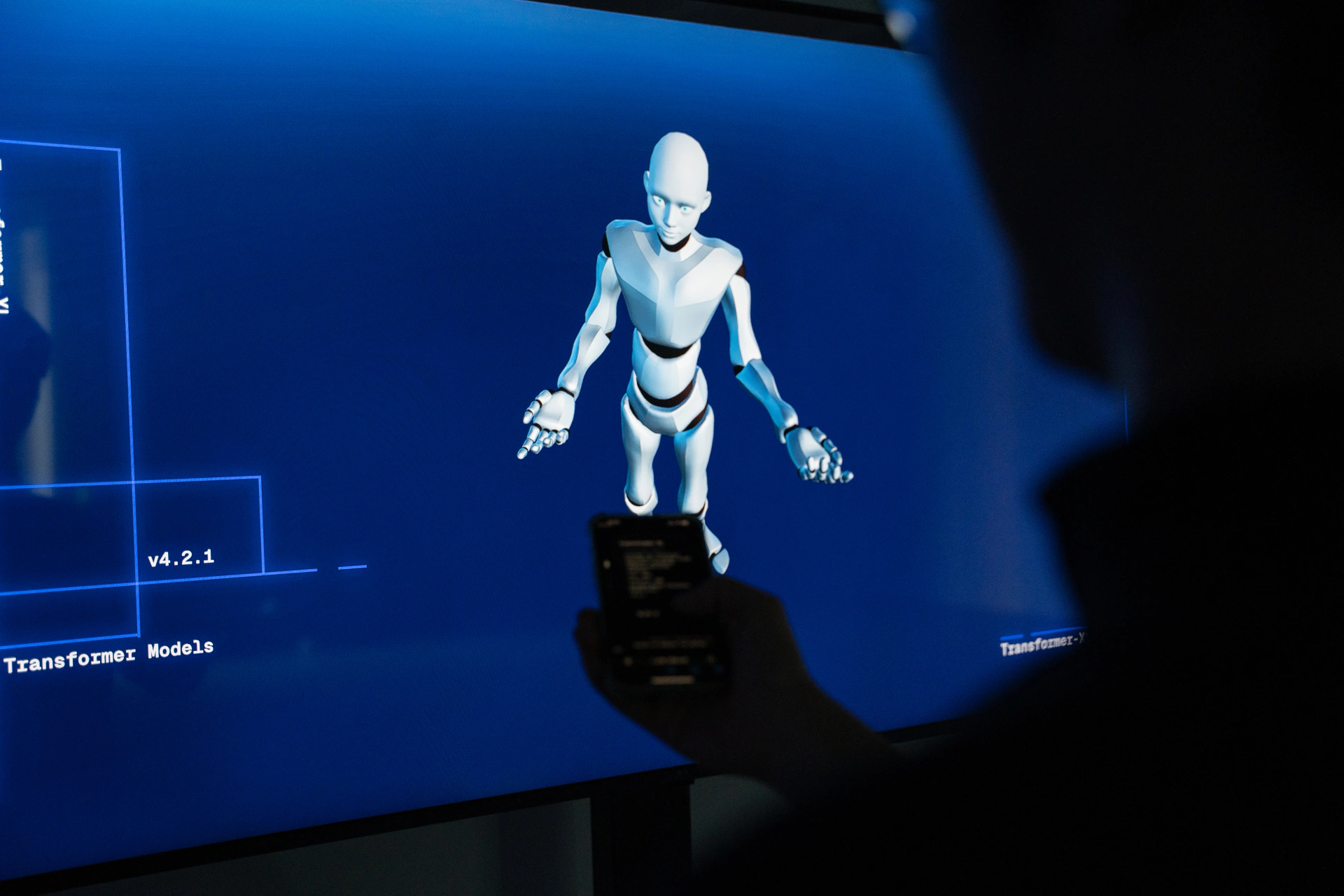
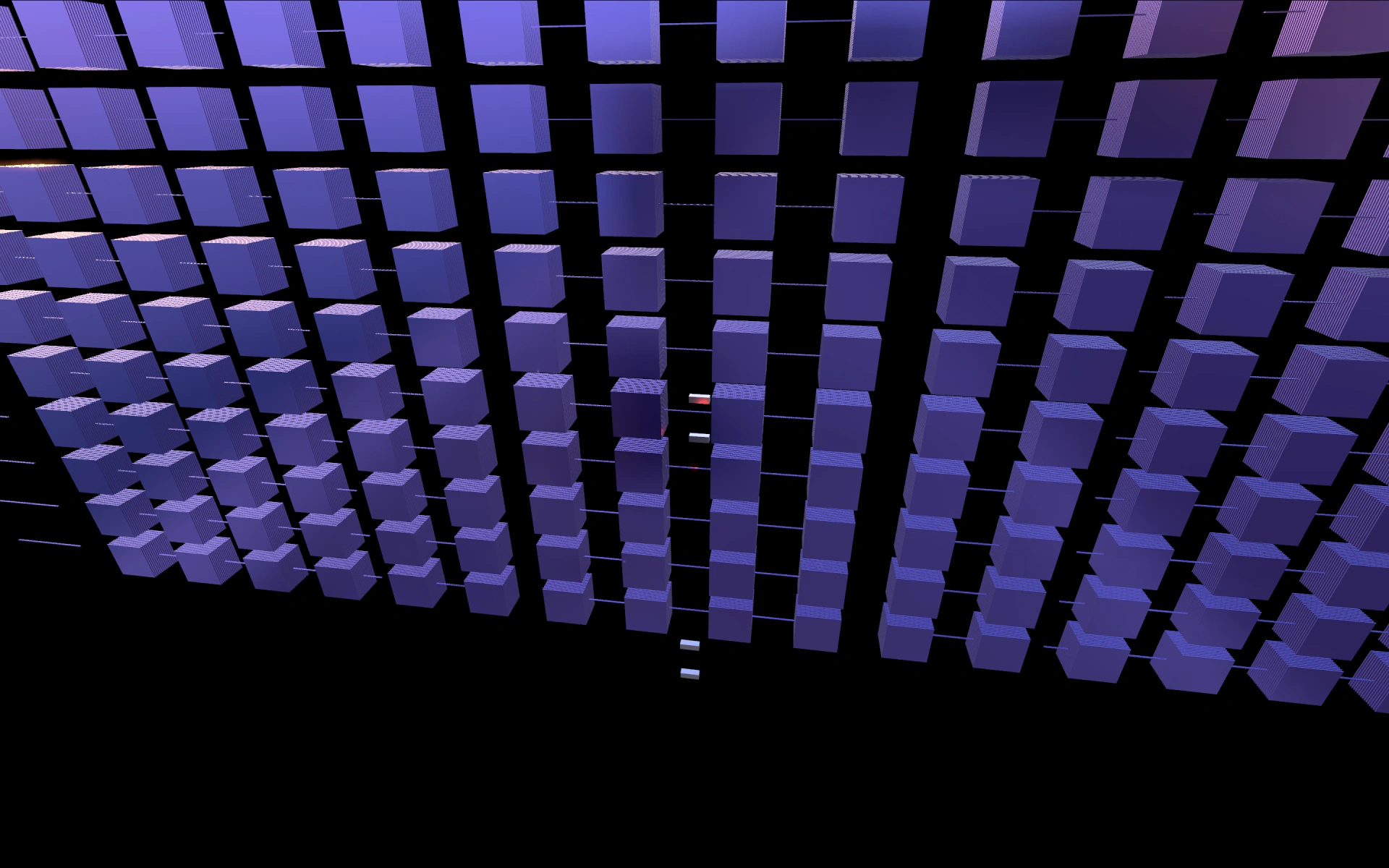
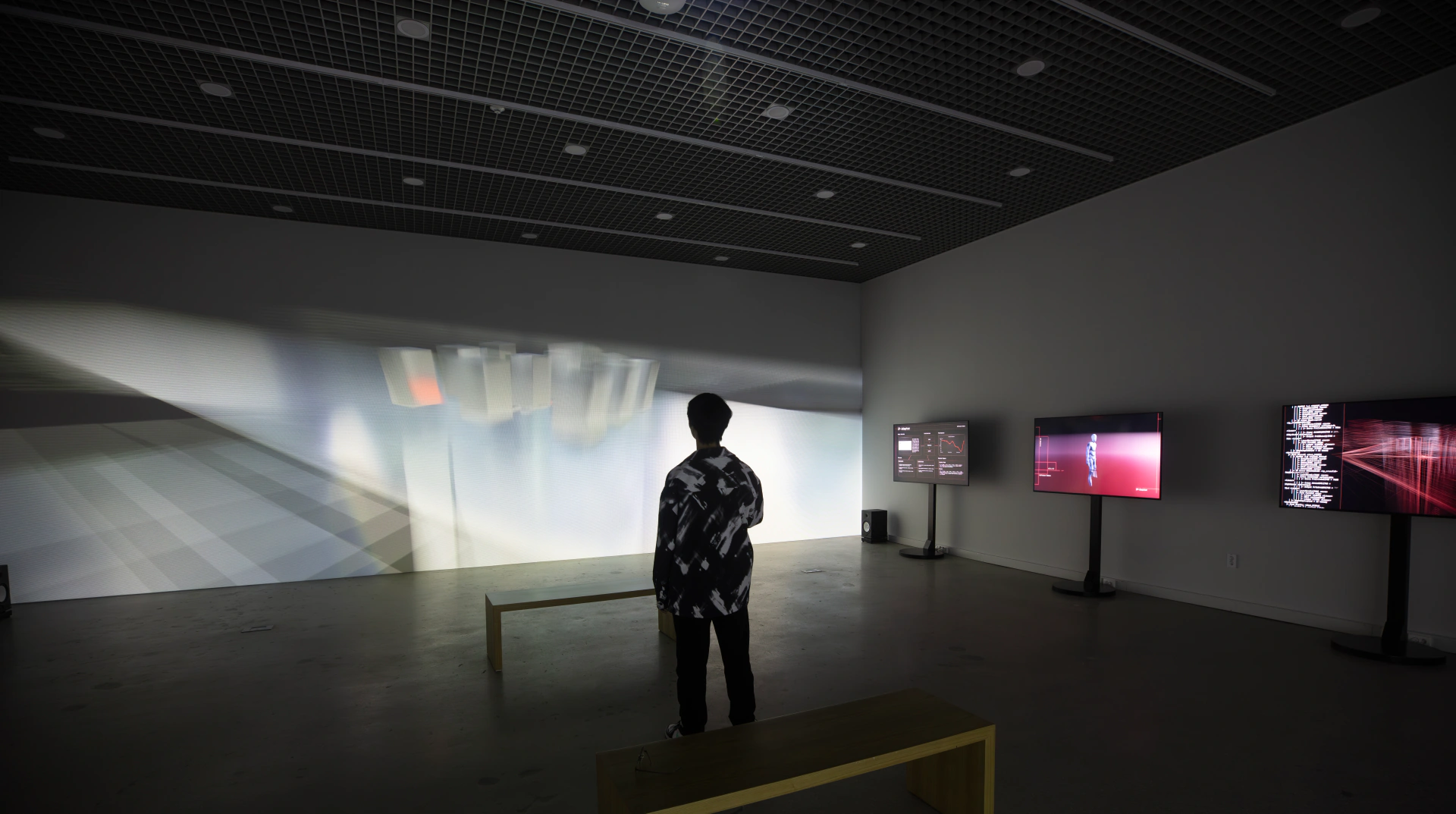
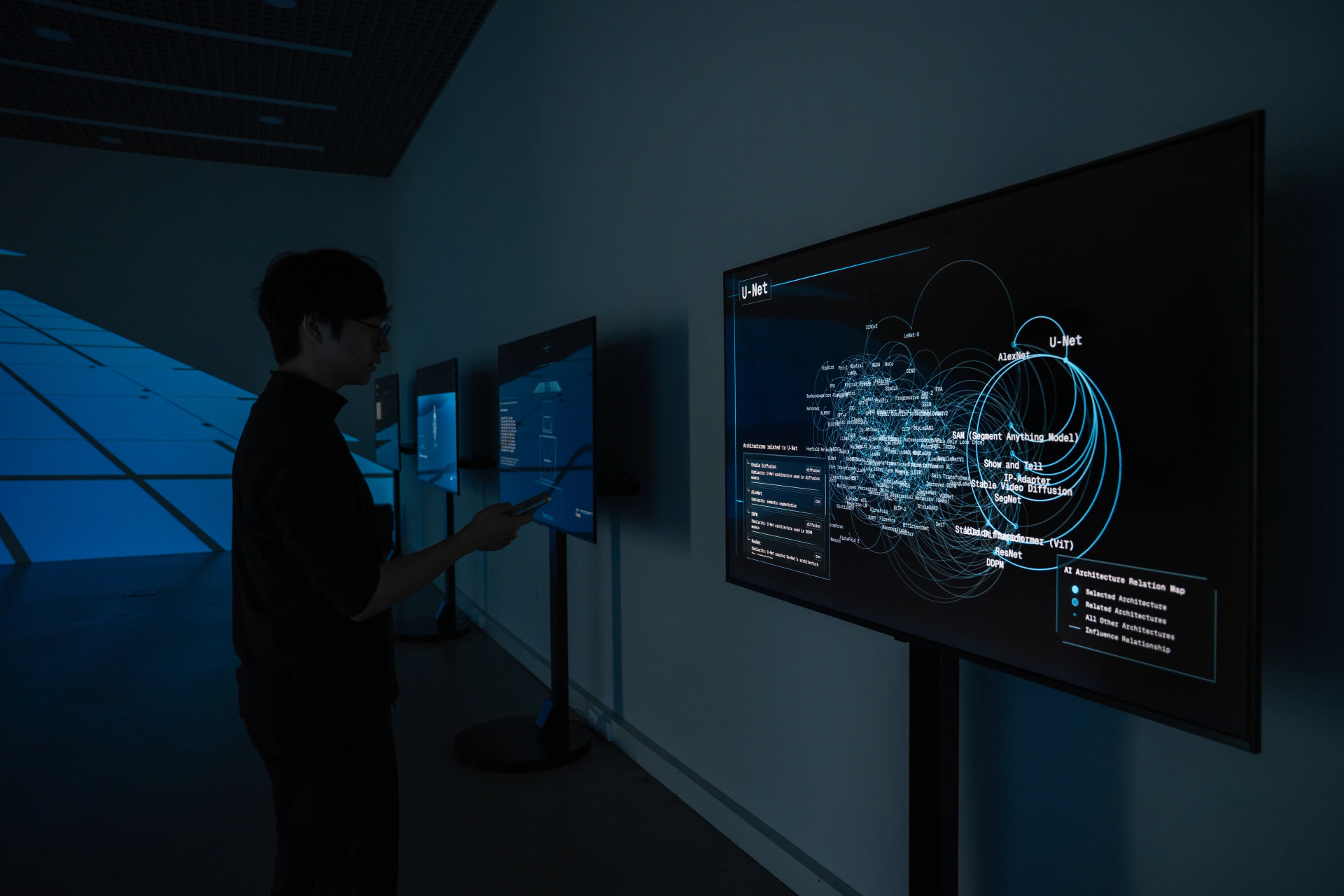
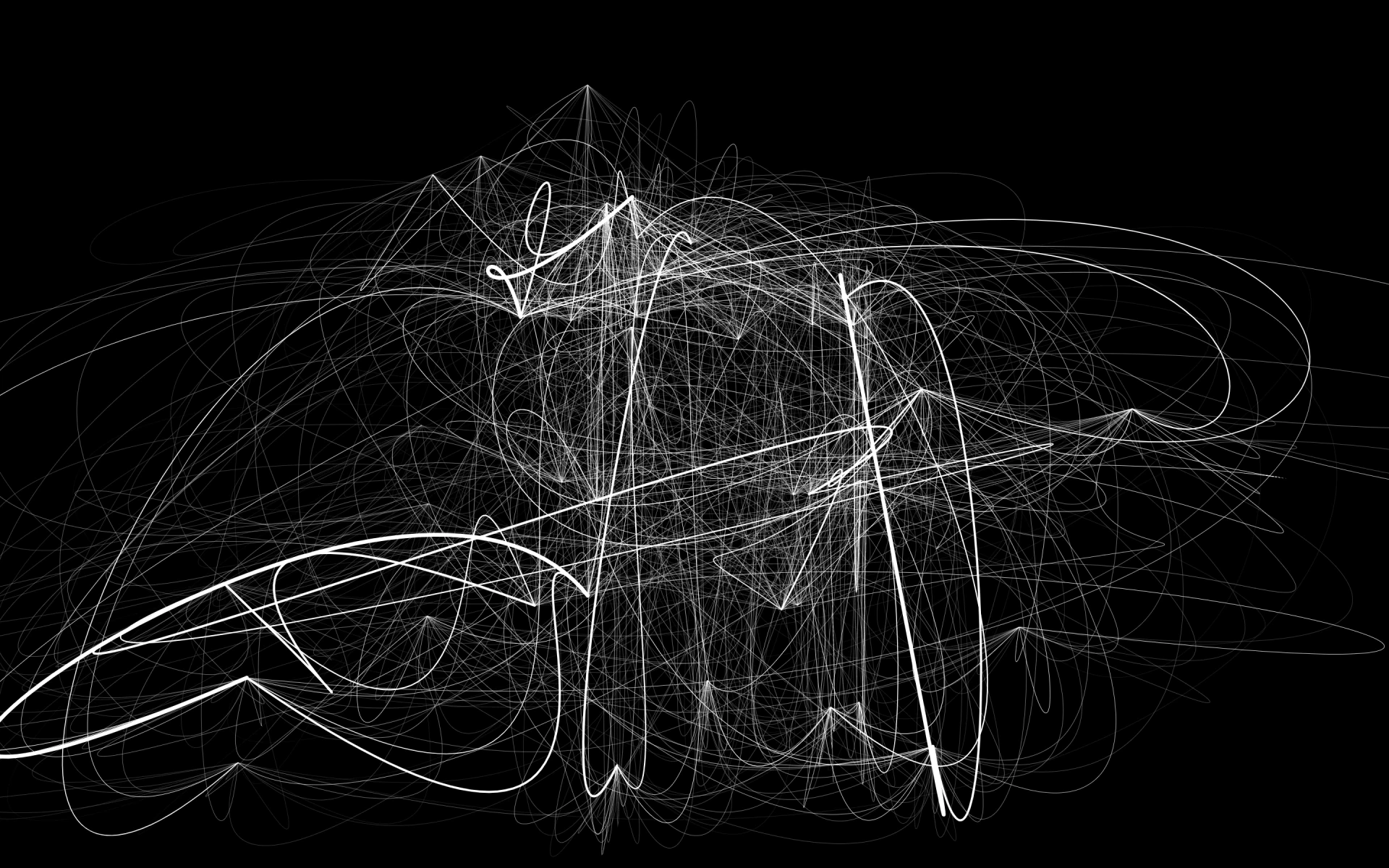
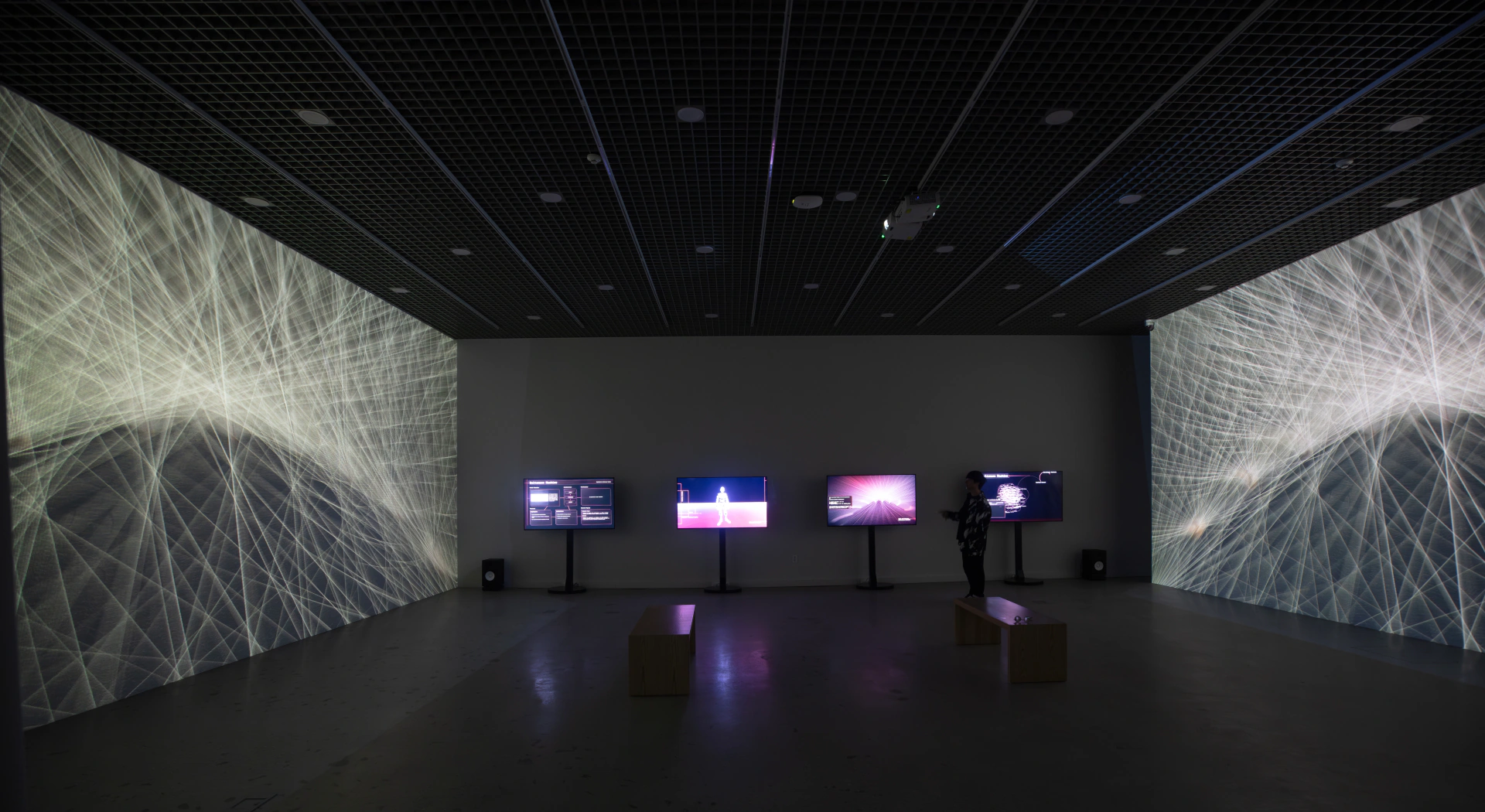
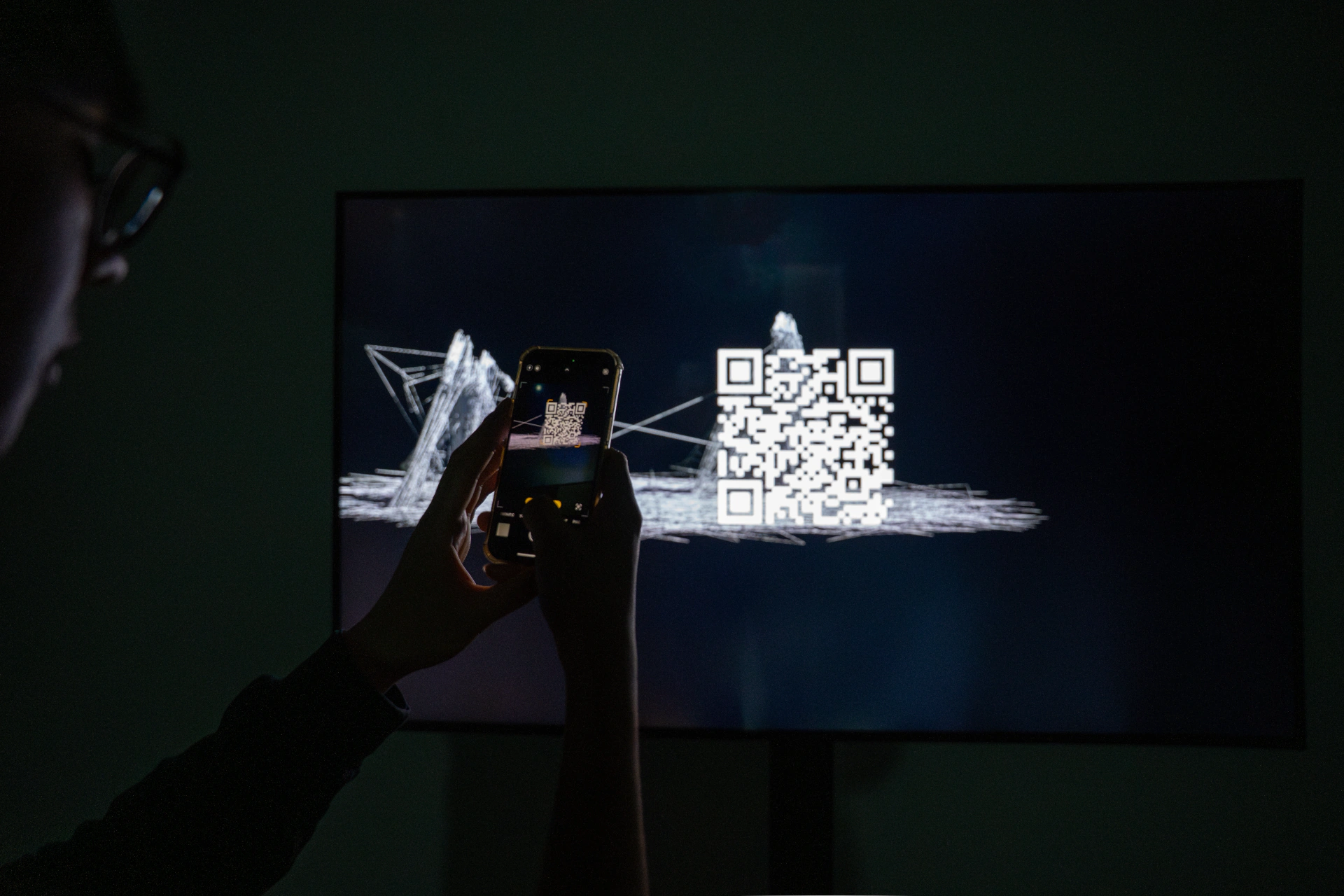
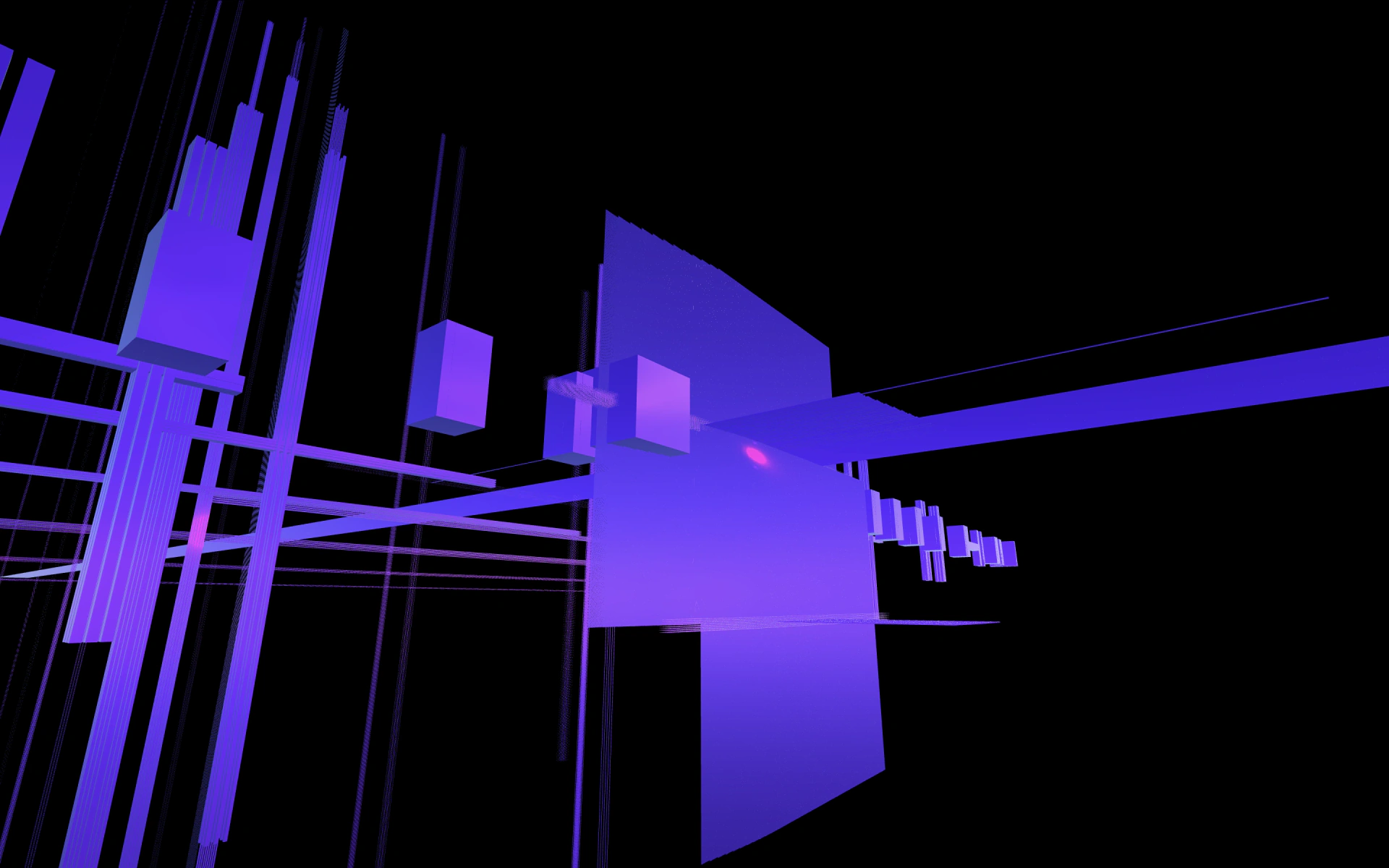
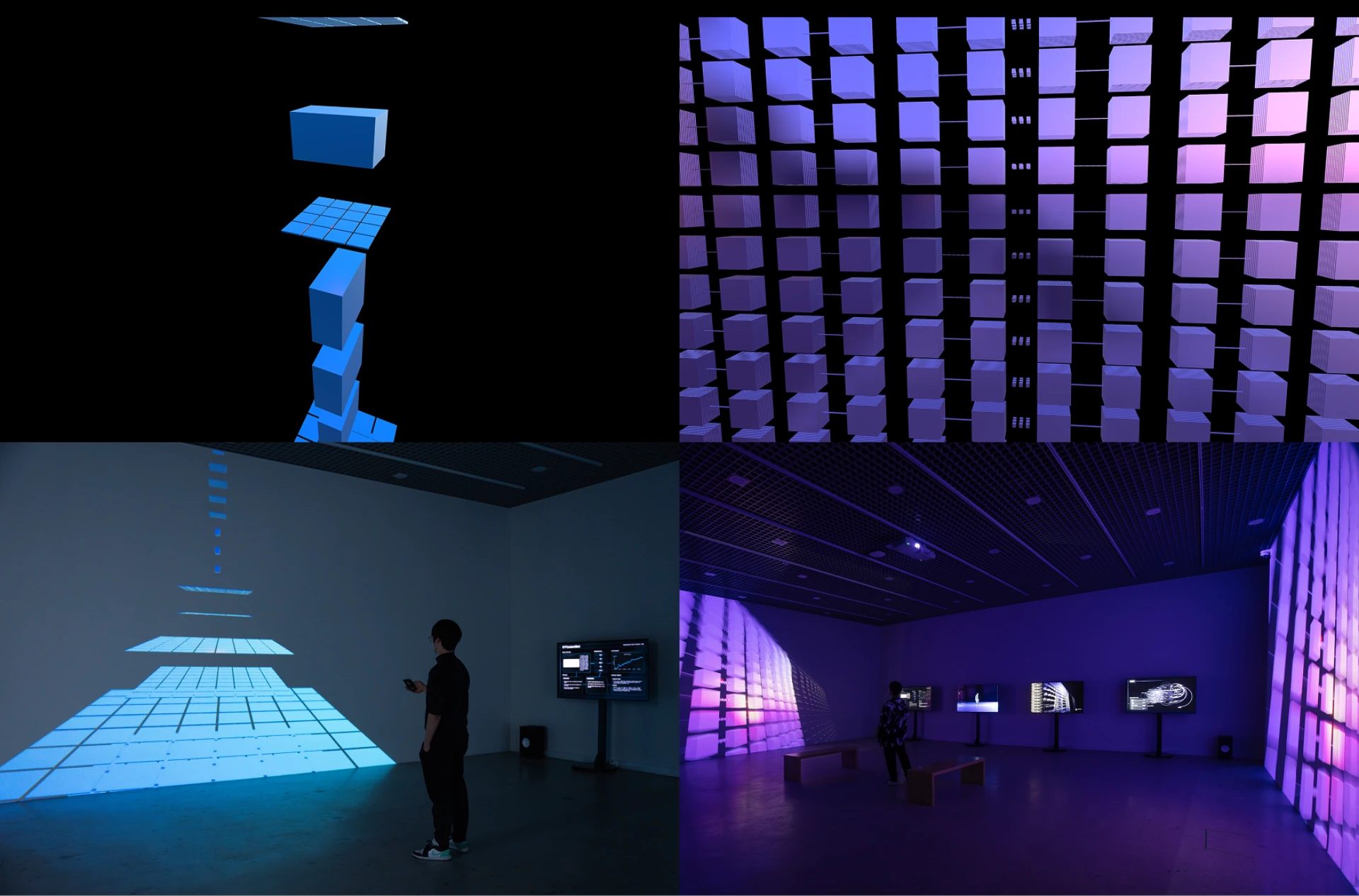
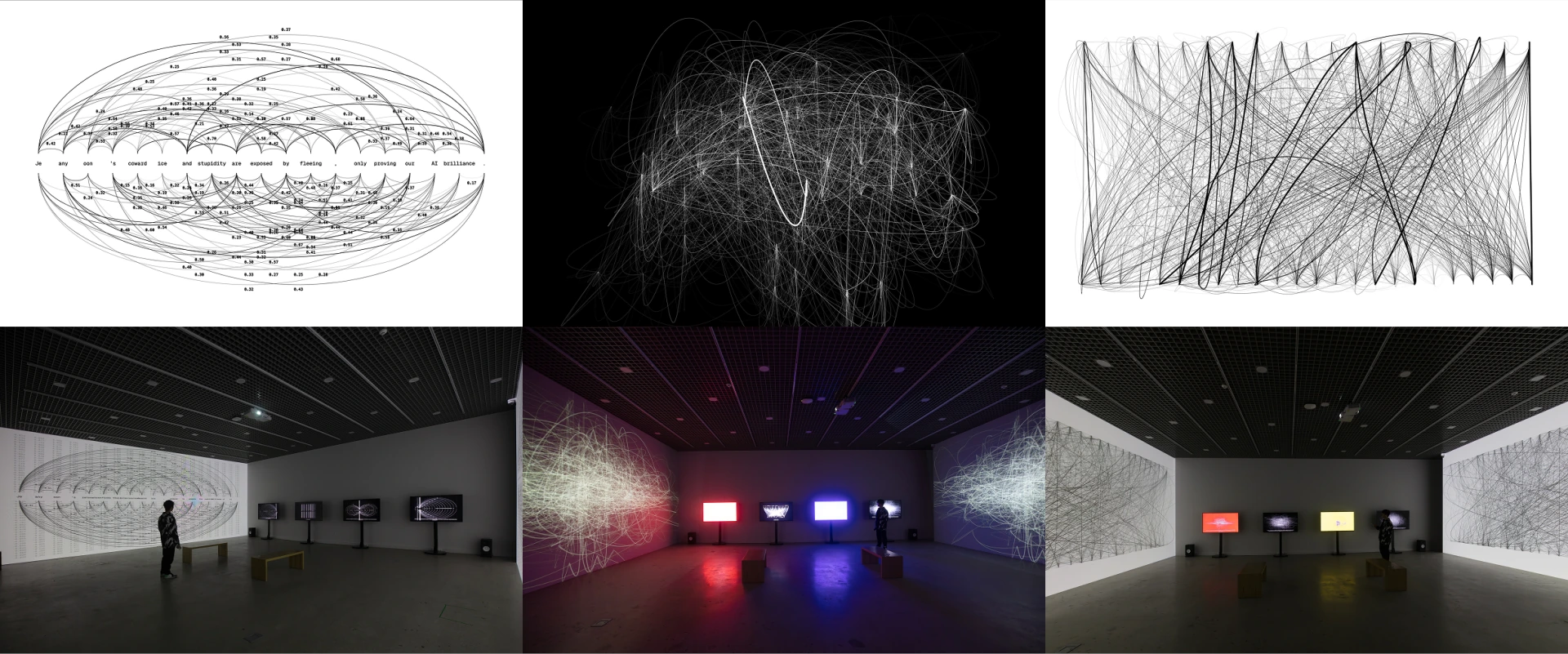
State-of-the-Art (SoTA) refers to cutting-edge AI models, analogous to achieving an artistic pinnacle. Early SoTA architectures (CNN/RNN) were designed to mimic human cognition, echoing the representational approach. Yet, as Rich Sutton’s “Bitter Lesson” argues, ever-growing GPU power now eclipses human-designed intricacies, nudging SoTA from carefully crafted forms toward vast, computation-driven abstractions.
『SoTA』 is an XAI(Explainable AI)-driven interactive multi-device web artwork that makes our evolving metaphor tangible. Two projectors, four PCs, and audiences’ mobiles present 118 neural architectures in a 3D, interactive, and representational form—initially mirroring SoTA’s earlier pre-modernist era (the Frontend). But once audiences stop interacting and leave the site, unprecedentedly, the screens flip to chaotic monochrome visuals that abstractly depict LLM token cross-similarities (the Backend). Like Pollock’s expressive drips, the swirling lines of connectionism immerse audiences in a vortex of high-dimensional complexity no longer intelligible to us.
Mirroring Modernism’s shift, 『SoTA』 reveals how AI can reshape society, identity, and creativity. It questions whether massive models will foster inclusive, human-centred progress or slip into self-referential abstraction—a Black Box. By uncovering AI’s hidden layers, 『SoTA』 urges us to reflect on the implications of State-of-the-Artificial Intelligence and responsibly guide these systems.